

If you split your week between the office and a home desk, your housing needs to work on both counts. Corporate accommodation for hybrid workers is less about a shiny lobby and more about whether the flat actually supports a Tuesday of back-to-back calls and a Thursday in the office. This guide covers the 12 features worth prioritising, plus the local logistics that matter in Oxford and Bicester.
By the end, you should be able to walk into a viewing (or read a listing) and know within five minutes whether it will make your working week easier or quietly harder.
Quick answer: what to look for first
- Best for: professionals on 1–12 month placements, relocating remote workers, and anyone commuting into Oxford or Bicester a few days a week.
- Non-negotiables: reliable broadband, a genuine desk (not a dining table), and a defined workspace with a door or screen.
- Best timing: start your search four to six weeks ahead; Oxford lets move fastest around the university vacation periods.
- Quick logistics: check the walk to the station first, then the broadband, then the furniture. Most people do it in the wrong order.
Why hybrid working changes what you need from a rental
When you worked in an office five days a week, a flat was mostly a place to sleep. Hybrid working flips that: your home is now a second workplace, so the quality of the workspace carries the same weight as the commute.
That shift explains why so many hybrid workers end up moving after three months. The flat looked fine on a Saturday viewing, but by week two the broadband dropped on every call and the only flat surface was the kitchen counter. The 12 features below are the ones that tend to decide whether a tenancy works.
The 12 features that actually matter
1. Broadband you can verify, not just trust
Ask the landlord or agent for the current provider and, where possible, run a speed test on your phone during the viewing. A listing that says “fast Wi-Fi” tells you nothing about upload speed, which is what video calls depend on.
2. A desk with a real chair
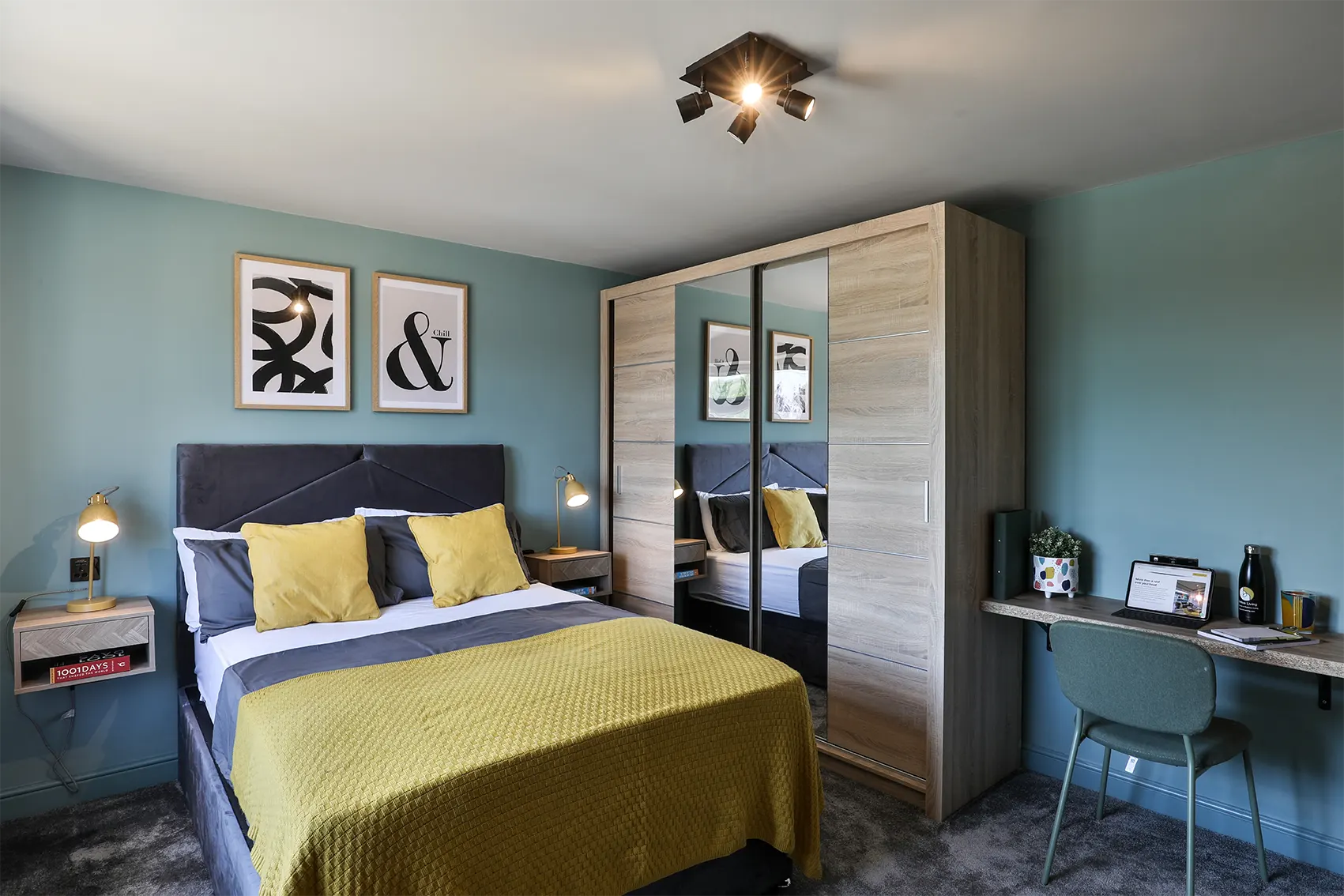
A desk at the right height and an adjustable chair protect your back across a full working week. If the property is furnished, check whether the chair is a task chair or a decorative dining chair. The difference shows up by Friday.
3. A workspace that can be closed off
A separate room is ideal. If that is not available, look for a defined zone with a door, a screen, or at least a clear boundary from the sofa. It helps you switch off at the end of the day.
4. Natural light and decent lighting
You will spend more daylight hours at that desk than you expect. Check how the room feels at the time of day you will actually use it, and look for a desk lamp so evening work does not strain your eyes.
5. Sound insulation and a quiet position
Ask what is above, below, and beside the flat. A top-floor flat away from a main road is usually quieter for calls. In Oxford, properties near busy arterial routes can be noticeably noisier during term time.
6. Enough power sockets in the right places
Count the sockets near where the desk will go. Laptop, monitor, phone, and lamp quickly add up, and trailing extension leads across a room is both untidy and a trip hazard.
7. A commute you have actually tested
Walk or ride the route at the time you would normally travel. A 15-minute walk to Oxford station or Bicester Village station is worth more than a cheaper flat that adds forty minutes each way, three days a week.
8. Flexible tenancy length
Hybrid contracts and project work often run in shorter blocks. Ask whether the tenancy can be offered for three, six, or twelve months, and what notice period applies if your role changes.
9. Bills included or clearly itemised
All-inclusive rent simplifies budgeting when you are new to an area. If bills are separate, ask for typical monthly figures for energy, water, and broadband so you can compare like for like.
10. Kitchen set up for real cooking
If you work from home, you will cook at home more. Check for a full-size fridge, a freezer with space, and enough worktop to actually prepare a meal. Shared kitchens need clear storage allocated per person.

11. Storage for work kit and everyday life
Monitors, cables, and a bike all need a home. Look for a wardrobe, a cupboard, and somewhere secure for a bicycle, which matters if you plan to cycle to the station.
12. A landlord or operator who responds quickly
Test this before you sign. Send a question during the enquiry stage and note how long a reply takes and how specific it is. That response time is a good predictor of how maintenance issues will be handled.
How to choose: a simple comparison framework
Score each property you view against four criteria, out of five, and total it. It stops you being swayed by a nice kitchen and forgetting the broadband.
- Commute: door-to-desk time at your usual travel hour.
- Workspace: desk, chair, light, and quiet.
- Cost: rent plus bills, plus travel, per month.
- Flexibility: tenancy length, notice period, and how easy it is to extend.
Where to look in Oxford and Bicester
Both towns suit hybrid workers for different reasons, and the right choice usually comes down to how often you need to be in the office.
Oxford
Central Oxford puts you within walking distance of the station and the city’s professional districts, which suits anyone commuting to London a couple of days a week. Expect smaller floorplans for the money, so prioritise layout over square footage. Insider tip: check the parking situation before you commit if you drive, as central permits are limited and often have waiting lists.
Bicester
Bicester offers more space per pound and quick rail links, which appeals to remote workers who only need to be in the office occasionally. Bicester Village station connects you towards Oxford and London, and the town centre is compact enough to walk. Insider tip: if you value quiet for calls, look slightly away from the main retail and station areas rather than directly beside them.
Surrounding villages
Villages between the two towns can offer peace and parking, but check the bus frequency and the last service of the evening before you rely on public transport. Insider tip: a village can still work well if you drive to a station and park, so check season ticket and parking costs as part of your budget.
At a glance: your viewing checklist
- Run a broadband speed test on your phone.
- Sit at the desk and check the chair height.
- Open and close the windows to test noise.
- Count sockets near the desk position.
- Time the walk to the station at your usual hour.
- Ask what is included in the rent.
- Ask the notice period and minimum term.
- Send a follow-up question and time the reply.
Local logistics: getting there, timing, and access
Oxford and Bicester both sit on the rail line towards London, which makes car-free hybrid working realistic. Oxford station serves the city centre and connects onward towards London Paddington, while Bicester has stations serving the town and the outlet village. Always check current timetables and fares before you rely on a specific service.
Timing matters in Oxford. The academic calendar affects demand and availability, with the summer months often busier for short-term lets. If you need a three-month placement, start looking early and be ready to move quickly.
On accessibility, ask directly about step-free access, lift provision, and door widths if you have mobility needs, as Oxford’s older housing stock varies widely. For booking notes, confirm the deposit protection scheme, the inventory process, and whether a guarantor is required for shorter tenancies.
Common mistakes to avoid
- Viewing only at weekends. You will miss the weekday noise, traffic, and light that shape your working day.
- Assuming “furnished” means work-ready. Furnished often means a bed and a sofa, not a desk and a task chair.
- Ignoring the true commute cost. Add rail fares and parking to the rent before comparing two options.
- Skipping the broadband question. It is the single feature most likely to force an early move.
FAQs
What is corporate accommodation for hybrid workers?
It is rented housing set up for people who split their week between home and an office. The key difference from a standard rental is that the workspace, broadband, and tenancy flexibility are treated as essentials rather than extras.
How far ahead should I book?
Four to six weeks is a sensible window for most moves. In Oxford, allow longer around the university vacation periods when short-term demand rises.
Is Bicester a good base for commuting to Oxford?
Yes, the rail link is quick and the town is walkable. Check current timetables and fares to confirm it fits your specific working pattern.
Should I choose bills-included rent?
It simplifies budgeting, especially for shorter stays. Compare the all-inclusive figure against rent plus typical bills so you are judging like for like.
What if I only need a three-month stay?
Ask about minimum terms and notice periods early. Shorter tenancies are often available but can be limited, so start your search sooner rather than later.
Living well while working hybrid
A good hybrid home does two jobs at once: it supports focused work and gives you a reason to close the laptop. That balance comes from small details, a desk by a window, a quiet street, a short walk to the station, and neighbours who make a new city feel less new. Get those right and the working week takes care of itself.
At B-Hive Living, we build communities in Oxford and Bicester for exactly this kind of life, with practical, well-connected homes and people around you who are in the same stage of their careers. If you are planning a move and want somewhere that works as hard as you do, we would love to hear from you. Start your application and tell us how you like to work and live.
